Smile Sound Chips is a family within the Soft Sound Systems project, consisting of imagined software sound chips that draw on the idea of physical sound-generating chips used in early computers, game consoles, and electronic instruments. Each chip lives in a small 200 × 120 pixel window and generates sound through its own timing, pitch, and sound-making rules. Its small face changes with the sound as the chip plays or rests.
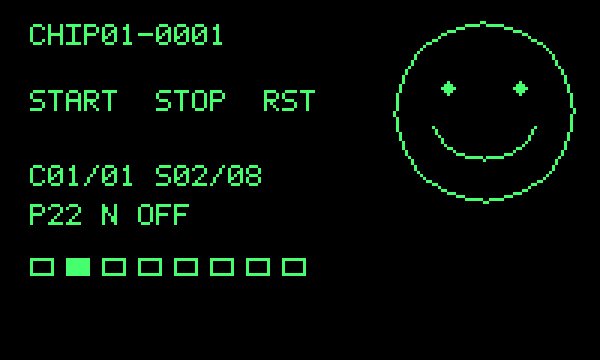
Figure 1. Enlarged reference image of the Smile Sound Chips application window. The original software window is 200 × 120 pixels.

Figure 2. Scale reference showing the original 200 × 120 pixel Smile Sound Chips application window within a 1920 × 1080 desktop area.
Figure 3. Documentation video of Smile Sound Chips Ecosystem No. 1. Video processing may cause differences in the original visual appearance.
Smile Sound Chips Ecosystem1 is a generative audiovisual work in which fifteen small software sound chips live together in a shared environment. Each chip has its own way of making sounds, its own rhythm, and its own facial expressions.
The chips independently alternate between being awake and asleep. While awake, they make sounds and slowly wander around the screen, bouncing off the edges and one another. When asleep, they become quiet and remain still. Their individual sounds overlap to create an ever-changing soundscape.
The work unfolds through sessions of varying lengths. Each new session brings a different background color that remains until the next session begins. Together, the chips create an evolving environment shaped by their individual behaviors and shared existence.
This video is a 11 minute, 22 second documentation of the work. For exhibitions, the generative work can be presented live, or a longer recorded version can be shown on a continuous loop.
Figure 4. Documentation video of Smile Sound Chips, CHIP01-0001. Video processing may cause differences in the original visual appearance.
CHIP01 is a small software sound chip built around one pulse-wave voice and one noise generator. The pulse voice uses a 50% duty cycle, producing a simple square-like tone, and moves through an eight-step structure. Each step lasts 280 milliseconds, with the pulse sounding for 170 milliseconds when active.
Each step can define its own relative pitch, whether the pulse sounds or rests, and whether noise is present. When enabled, the noise appears as a short 45-millisecond accent near the beginning of the step. The pulse and noise are mixed at different levels, with the pulse forming the main sound and the noise acting as a secondary element.
The face changes with the sequence while the chip is active, and the noise state is also shown visually when it occurs. When the chip is stopped, the face changes to a sleeping expression.
Figure 5. Documentation video of Smile Sound Chips, CHIP01-0001. Video processing may cause differences in the original visual appearance.
CHIP02 is a small software sound chip built around two pulse-wave voices running at different speeds.
Voice A uses a 25% duty cycle and moves through a four-step structure, with each step lasting 500 milliseconds and the pulse sounding for 170 milliseconds when active. Voice B uses a 37.5% duty cycle and moves through a three-step structure, with each step lasting 310 milliseconds and the pulse sounding for 190 milliseconds when active.
Each voice can define its own relative pitches and whether individual steps sound or rest. Because the two voices use different step lengths and pattern lengths, their relationship continually shifts over time before returning to the same overall alignment.
The face is directly connected to the two voices. Voice A controls the eyes as its four-step pattern advances, while Voice B controls the depth of the smile through its three-step pattern. When the chip is stopped, the face changes to a sleeping expression.
Figure 6. Documentation video of Smile Sound Chips, CHIP01-0001. Video processing may cause differences in the original visual appearance.
CHIP03 is a small software sound chip built around one stepped-triangle voice and a pitch-memory system. Rather than following a fixed pitch sequence, it changes its current pitch by repeatedly applying a set of five numerical rules within defined minimum and maximum pitch boundaries.
Each step lasts 280 milliseconds, with the sound active for 170 milliseconds. The pitch reached at one step becomes the starting point for the next. When applying a rule would move the pitch beyond a boundary, the pitch is clamped to that boundary and the system reverses its overall direction.
The face follows the chip’s pitch movement. The eyes respond to whether the pitch moves upward or downward, with separate expressions for upper and lower boundary events, while the depth of the smile changes according to the current pitch position within the selected range. When the chip is stopped, the face changes to a sleeping expression.
Figure 7. Documentation video of Smile Sound Chips, CHIP04-0001. Video processing may cause differences in the original visual appearance.
CHIP04 is a small software sound chip built around two continuous sine-wave oscillators operating at slightly different frequencies. The first oscillator establishes a base pitch, while the second is positioned at a small frequency offset, producing periodic changes in amplitude through interference between the two signals.
The frequency difference is adjustable in increments of 0.1 hertz, with the current composition using an offset of 1 hertz. As the oscillators move in and out of phase, their combined sound alternates between reinforcement and cancellation. Unlike a stepped sequence, the system produces a continuous tone whose amplitude changes over time.
The face follows the relationship between the two oscillators. Both eyes move horizontally together according to their relative phase, while the depth of the smile follows the resulting amplitude envelope. The smile becomes deeper during reinforcement and flatter during cancellation. When the chip is stopped, the face changes to a sleeping expression.
Figure 8. Documentation video of Smile Sound Chips, CHIP0-0001. Video processing may cause differences in the original visual appearance.
CHIP05 is a small software sound chip built around a single percussive click generator and an eight-step structure. Rather than using a pitched oscillator to produce sustained tones, it generates short digital impulses formed from two high-frequency components with a decaying amplitude envelope.
Each step lasts 240 milliseconds and can produce one of four events: rest, short click, medium click, or long click. The three click durations are 3, 8, and 15 milliseconds, respectively. Each step independently determines which event occurs, creating rhythmic patterns through the placement and duration of individual impulses.
The face responds directly to the click events. Each successive click causes one eye to blink, alternating between left and right, while the mouth briefly changes into a smile. The blinking expression lasts 80 milliseconds, extending beyond the duration of the audible click. When the chip is stopped, the face changes to a sleeping expression.
Figure 9. Documentation video of Smile Sound Chips, CHIP06-0001. Video processing may cause differences in the original visual appearance.
CHIP06 is a small software sound chip built around a two-operator frequency-modulation system. One sine-wave oscillator acts as the carrier, while a second sine-wave oscillator modulates its frequency at a fixed ratio of approximately 1.414 to 1, producing bell-like sounds with varying harmonic complexity.
The chip follows an eight-step structure, with each step lasting 430 milliseconds and each active note sounding for approximately 300 milliseconds. Each step defines its own relative pitch and modulation level, ranging from zero to four. Level zero produces a rest, while higher levels introduce increasing amounts of frequency modulation. During each note, the modulation decreases faster than the amplitude, causing the sound to change gradually from a more metallic character toward a simpler tone.
The face reflects the relationship between the carrier and modulator. The left eye remains visually fixed, while the right eye changes between filled and outlined forms according to the changing modulation intensity. The depth of the smile also follows this intensity as each note develops and fades. When the chip is stopped, the face changes to a sleeping expression.
Figure 10. Documentation video of Smile Sound Chips, CHIP07-0001. Video processing may cause differences in the original visual appearance.
CHIP07 is a small software sound chip built around a ring-modulation system combining one triangle-wave oscillator and one bipolar pulse-wave oscillator. The two signals are multiplied together, producing changes in timbre according to the frequency relationship between the carrier and modulator.
The chip follows an eight-step structure, with each step lasting 360 milliseconds and each active sound lasting approximately 250 milliseconds. Each step defines a relative pitch and one of five modulation modes. Mode zero produces a rest, while the remaining four modes select different fixed frequency ratios between the oscillators. These ratios include both harmonic and inharmonic relationships, producing sounds that vary in tonal clarity and complexity.
The face responds to the selected modulation mode and the activity of each sound. The eyes move slightly in opposing vertical directions, while the mouth forms an angular, segmented smile that becomes more pronounced during active notes and gradually returns to a shallower expression. When the chip is stopped, the face changes to a sleeping expression.
Figure 11. Documentation video of Smile Sound Chips, CHIP08-0001. Video processing may cause differences in the original visual appearance.
CHIP08 is a small software sound chip built around a resonating delay system inspired by the Karplus–Strong synthesis method. Rather than generating continuous tones directly, it uses short bursts of digitally generated noise to excite feedback delay lines, producing resonances that gradually decay over time.
The chip follows an eight-step structure, with each step lasting 420 milliseconds. Each step defines a relative pitch and one of five resonance modes. Mode zero produces no new excitation, while modes one through four determine different feedback levels and decay characteristics. Previously generated resonances continue sounding into later steps, including rests, allowing multiple independent resonances to overlap. The system maintains separate delay lines for these sounds rather than replacing each note with the next.
The face responds to the resonating sounds. The eyes follow the pitch of the most recently excited resonance, while the depth of the smile follows the combined audible amplitude of the active resonances. As the sounds decay, the smile gradually becomes shallower. When the chip is stopped, the face changes to a sleeping expression.
Figure 12. Documentation video of Smile Sound Chips, CHIP09-0001. Video processing may cause differences in the original visual appearance.
CHIP09 is a small software sound chip built around an irregular pulse-event generator controlled by a 16-bit linear feedback shift register (LFSR). The register produces a deterministic sequence of numerical values used to determine the timing, pitch variation, occurrence, and duration of individual sound events.
The system uses eight rule cells, each defining a relative pitch and an event-probability level. The current composition uses a nominal interval of 230 milliseconds, but the actual spacing varies according to values generated by the LFSR. Each event may produce a rest or a short pulse-wave sound lasting 32, 65, or 100 milliseconds, with additional variation in pitch. Although the resulting patterns can appear irregular, the same initial seed and composition reproduce the same sequence.
The face responds to the generated events. Both eyes move horizontally together according to the selected pitch variation, while the depth of the smile changes with the amplitude of each audible pulse. During rests, the smile returns to a shallower expression. When the chip is stopped, the face changes to a sleeping expression.
Figure 13. Documentation video of Smile Sound Chips, CHIP10-0001. Video processing may cause differences in the original visual appearance.
CHIP10 is a small software sound chip built around one sine-wave oscillator and an amplitude-quantization system. Instead of reproducing the continuous amplitude of a sine wave directly, the system reduces it to a limited number of discrete levels, changing the waveform's shape and harmonic content.
The chip follows an eight-step structure, with each step lasting 380 milliseconds and each active tone sounding for 290 milliseconds. Each step defines a relative pitch and a quantization mode. Mode zero produces a rest, while modes one through four represent quantization depths of 1, 2, 3, and 4 bits, corresponding to 2, 4, 8, and 16 amplitude levels. Lower resolutions produce more pronounced waveform distortion, while higher resolutions increasingly approximate the original sine wave.
The face reflects the selected quantization resolution. The eyes change their geometric form according to the number of amplitude levels, while the mouth takes on a stepped, staircase-like shape that changes with the resolution and sound activity. When the chip is stopped, the face changes to a sleeping expression.
Figure 14. Documentation video of Smile Sound Chips, CHIP11-0001. Video processing may cause differences in the original visual appearance.
CHIP11 is a small software sound chip built around two sine-wave components operating at the same nominal frequency, with a continuously adjustable phase relationship. Unlike two oscillators with different frequencies, the components maintain the same pitch while their relative phase is deliberately changed, producing reinforcement or cancellation through interference.
The chip follows an eight-step structure, with each step lasting 1,400 milliseconds. Each step defines a relative pitch and a target phase difference of 0, 45, 90, 135, or 180 degrees. The system moves smoothly between phase targets over 1,200 milliseconds. When the components are in phase, their signals reinforce each other; as the difference approaches 180 degrees, their combined amplitude decreases toward cancellation. The oscillator phase continues across successive steps rather than restarting at each transition.
The face follows the changing phase relationship. As the phase difference increases, the eyes gradually become narrower and the smile becomes flatter, reflecting the reduction in the combined amplitude. When the chip is stopped, the face changes to a sleeping expression.
Figure 15. Documentation video of Smile Sound Chips, CHIP12-0001. Video processing may cause differences in the original visual appearance.
CHIP12 is a small software sound chip built around three independent triangle-wave oscillators operating in a low register. Rather than following a conventional step sequence, the three voices use separate periodic amplitude envelopes, creating a slowly changing combination of sustained tones.
The three voices operate with cycle lengths of 7, 11, and 17 seconds. Each voice has its own relative pitch and presence setting, determining whether it is silent or audible for 40, 55, 70, or 85 percent of its cycle. The current composition uses a 900-millisecond fade interval to shape transitions between audible and inaudible states. The oscillators continue advancing even while their amplitudes are reduced to zero. Because their cycles have different lengths, the combinations of audible voices change gradually over time before returning to the same overall envelope alignment.
The face is connected directly to the three voices. Voice A controls the left eye, Voice B controls the right eye, and Voice C controls the depth of the smile. Each facial element changes independently according to the amplitude envelope of its corresponding voice. When the chip is stopped, the face changes to a sleeping expression.
Figure 16. Documentation video of Smile Sound Chips, CHIP13-0001. Video processing may cause differences in the original visual appearance.
CHIP13 is a small software sound chip built around a single sine-wave oscillator and a wavefolding system. Rather than combining multiple oscillators, it changes the shape of one waveform by applying a nonlinear transformation that bends and reverses portions of the signal as its amplitude exceeds defined thresholds.
The chip follows an eight-step structure, with each step lasting 460 milliseconds and each active sound lasting 350 milliseconds. Each step defines a relative pitch and one of five wavefolding modes. Mode zero produces a rest, mode one preserves the original sine wave, and modes two through four apply progressively stronger folding. Higher folding levels introduce additional harmonic complexity. The system processes the folded signal at four times the audio sample rate before averaging it, reducing some of the high-frequency artifacts introduced by the transformation.
The face reflects the degree of wavefolding. The eyes change their geometric form according to the selected mode, while the smile develops additional bends and angular changes as the folding intensity increases. When the chip is stopped, the face changes to a sleeping expression.
Figure 17. Documentation video of Smile Sound Chips, CHIP14-0001. Video processing may cause differences in the original visual appearance.
CHIP14 is a small software sound chip built around one sine-wave oscillator and a delayed-sound memory system. Each active sound can generate a series of progressively quieter repetitions, allowing earlier events to remain audible after the original sound has ended.
The chip follows an eight-step structure, with each step lasting 480 milliseconds and each original tone lasting 190 milliseconds. Each step defines a relative pitch and one of five memory modes. Mode zero introduces no new sound, mode one produces only the original tone, and modes two through four generate 2, 4, or 6 delayed repetitions. The repetitions are separated by 310 milliseconds, with decreasing amplitude. Once generated, the repetitions remain in the system independently of subsequent steps, allowing echoes from earlier events to overlap with new sounds and continue through rests.
The face distinguishes between immediate and remembered sound. The eyes respond to the original tone, while the depth of the smile follows the delayed repetitions held in memory. As a result, the eyes may become inactive while the smile continues responding to sounds generated earlier. When the chip is stopped, the face changes to a sleeping expression.
Figure 18. Documentation video of Smile Sound Chips, CHIP15-0001. Video processing may cause differences in the original visual appearance.
CHIP15 is a small software sound chip built around two independent pulse-clock systems that can influence each other's timing. The clocks have different natural periods, 430 and 460 milliseconds, and are connected through a phase-coupling mechanism that can gradually change their relationship.
The chip follows an eight-step structure, with each step lasting 3,000 milliseconds. Each step defines a relative pitch and one of five coupling levels, ranging from freely running clocks to strong interaction. Each clock produces a short sine-wave tone when its phase completes a cycle, with a nominal tone duration of 115 milliseconds. Without coupling, the clocks gradually move in and out of alignment. As coupling increases, each clock influences the timing of the other, potentially bringing their pulses into synchronization. Their phases continue evolving across step boundaries rather than restarting with each new setting.
The face follows the relationship between the two clocks. The left eye responds to Clock A and the right eye responds to Clock B, while the depth of the smile reflects how closely their phases align. As the clocks approach synchronization, the smile becomes deeper; as they move apart, it becomes shallower. When the chip is stopped, the face changes to a sleeping expression.
These videos are recorded documentation of the artworks. The original works are generative standalone software applications in which sound and visuals are produced in real time by each chip’s programmed behavior. The standalone applications are the reference for the original visual appearance.
The software renders the interfaces using RGB 70, 255, 110 on RGB 0, 0, 0. The documentation videos are encoded as H.264 using YUV 4:4:4 with BT.709 color primaries, transfer characteristics, and color matrix. The videos use limited-range BT.709 conversion from the original full-range RGB frames.
Although the documentation videos are produced from the same rendered frames, video encoding, platform processing, browser or media-player color management, and display characteristics may cause differences in color, contrast, sharpness, or saturation. For this reason, the standalone software applications should be considered the reference for the original visual appearance.
Programmed reference colors: RGB 70, 255, 110 on RGB 0, 0, 0.
© 2026 Wonbin Yang